 +91 95505 74871


What Is Neck Swelling?
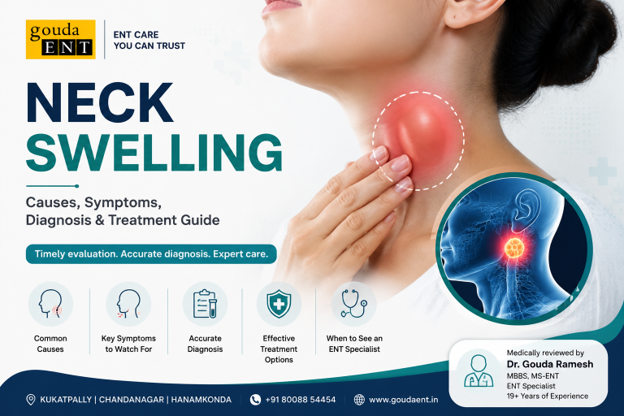
A neck lump or swelling means a visible or felt lump in the neck. Most cases come from an infection or a swollen lymph node, some come from the thyroid, a cyst, or a growth that needs a proper check.
Types of Neck Swelling
The appearance and characteristics of neck lump or neck swelling can provide important clues about its underlying cause. Some swellings are temporary and related to infections, while others may require further evaluation by an ENT specialist. Common types include:
| Type of Neck Swelling | Description |
| Painful Neck Swelling | Often associated with bacterial or viral infections, inflamed lymph nodes, or a neck abscess. |
| Painless Neck Swelling | May be caused by thyroid disorders, cysts, benign growths, or, in some cases, tumors. Persistent painless swelling should be evaluated. |
| Swelling on One Side of the Neck | Commonly linked to enlarged lymph nodes, salivary gland disorders, or localized infections. |
| Front of the Neck Swelling | Frequently associated with thyroid enlargement (goiter), thyroid nodules, or thyroglossal duct cysts. |
Common Causes of Neck Swelling
- Swollen Lymph Nodes: The most common cause of a swollen lymph node in the neck or neck lump is an infection such as a sore throat, cold, or tonsillitis. According to Mayo Clinic, most swollen lymph nodes are linked to a viral or bacterial infection and settle down once the underlying illness clears, though nodes that keep enlarging over several weeks need medical evaluation.
- Bacterial or Viral Infections: Infections affecting the throat, mouth, or upper respiratory tract can cause inflammation and swelling in the neck.
- Thyroid Disorders: Conditions such as thyroid enlargement, nodules, or inflammation may cause swelling at the front of the neck. As explained by MedlinePlus (NIH), this type of thyroid enlargement is called a goiter and can occur with normal, low, or high thyroid hormone levels depending on its underlying cause.
- Salivary Gland Disorders: Infection, inflammation, or blockage of the salivary glands can lead to swelling below the jaw or along the neck.
- Neck Cysts: Congenital cysts may become enlarged or infected, resulting in a noticeable neck lump. Cleveland Clinic notes that a thyroglossal duct cyst, one of the most common congenital neck cysts, is usually painless unless it becomes infected.
- Benign or Cancerous Tumours: Although less common, persistent or enlarging neck masses should be evaluated by an ENT specialist.
Signs and Symptoms to Watch For
A lump in the neck may appear with different symptoms depending on the underlying cause. At Gouda Ramesh ENT Hospital, we advise our patients to watch for these signs and recommend seeking medical evaluation if they persist or worsen
- Visible Lump in the Neck: A noticeable swelling or mass that can be seen or felt.
- Pain or Tenderness: Discomfort or sensitivity around the swollen area.
- Difficulty Swallowing or Breathing: May occur when the swelling affects nearby structures.
- Fever or Redness/Warmth: Can indicate an infection or inflammation.
- Sore Throat or Hoarseness: May be associated with throat or voice box-related conditions.
- Unexplained Weight Loss: A warning sign that requires proper medical evaluation.
Note: If your neck swelling does not improve or continues to grow, you can consult the specialists at Gouda Ramesh ENT Hospital, Kukatpally, for timely evaluation and appropriate care.
How Is Neck Swelling Diagnosed?
Diagnosing neck swelling begins with a review of your symptoms and a physical examination. Additional tests may be recommended to identify the underlying cause and determine the most appropriate treatment.
- Medical History: The doctor will ask about the duration of swelling, associated symptoms, infections, and any changes in size.
- Physical Examination: The neck, throat, and nearby areas are examined to check the location and nature of the swelling.
- Blood Tests: May be advised to identify signs of infection, inflammation, or thyroid-related problems.
- Neck Ultrasound: Helps evaluate lymph nodes, thyroid swelling, cysts, and other neck masses.
- CT/MRI (When Needed): Used for a detailed view of deeper structures or complex swellings.
- FNAC or Biopsy: A small sample of tissue may be tested to understand the nature of the neck mass. As Johns Hopkins Medicine explains, fine-needle aspiration is a minimally invasive way to sample a suspicious lump and remains one of the most reliable tools for confirming what a neck mass actually is.
- Endoscopy (Selected Cases): A camera examination may be recommended to check the throat or related areas.
Treatment Options for Neck Swelling
| Treatment Type | Treatment Options | When It May Be Used |
| Home Care | Rest, hydration, and warm compress (when appropriate) | Helps relieve discomfort and support recovery in minor swelling. |
| Medical Treatment | Antibiotics, anti-inflammatory medicines, thyroid medications | Used based on the underlying cause, such as infection, inflammation, or thyroid-related conditions. |
| Medical Procedure | Drainage of abscess | Recommended when a collection of infection and pus needs to be removed. |
| Surgical Treatment | Removal of cysts, benign tumors, thyroid surgery, or cancer surgery (if required) | Consideration when swelling requires removal or further management. |
When Should You See an ENT Specialist?
Seek medical advice if your neck swelling persists, increases in size, or is accompanied by symptoms such as difficulty swallowing, breathing, or unexplained weight loss.
- A neck swelling or lump that lasts longer than two weeks or does not improve.
- A rapidly growing lump or a noticeable change in its size or shape.
- Difficulty swallowing, breathing, or persistent hoarseness, especially if symptoms are worsening.
- Persistent pain, redness, warmth, or fever, which may indicate an infection requiring treatment.
- A hard, fixed, or painless neck lump, particularly if it develops without a recent infection.
- Unexplained weight loss, night sweats, or ongoing fatigue along with neck swelling, as these symptoms need further medical assessment.
Note : Early evaluation at Gouda Ramesh ENT Hospital by a Throat Specialist in Kukatpally can help identify the underlying cause, rule out serious conditions, and ensure timely, appropriate treatment. If you’re searching for an ENT Clinic near me or Best ENT Hospital in Kukatpally, seek care without delay if these warning signs are present.
Tips to Reduce the Risk of Neck Swelling
While every cause of neck swelling or neck lumps cannot be prevented, maintaining healthy habits can help reduce the risk of certain conditions:
- Maintain Good Oral Hygiene: Regular brushing and dental care can help prevent infections that may affect the neck area.
- Treat Throat Infections Early: Timely care for throat infections can help prevent complications.
- Avoid Tobacco Products: Avoiding tobacco reduces the risk of serious head and neck conditions. Data published by the CDC identifies tobacco use as the leading preventable risk factor for cancers of the head and neck, including the oral cavity, pharynx, and larynx.
- Stay Hydrated: Adequate fluid intake supports overall health.
- Manage Thyroid Conditions: Regular monitoring helps control thyroid-related neck swelling.
- Attend routine health check-ups, especially if you notice persistent or recurrent neck swelling or have risk factors for thyroid or head and neck conditions
Why Choose Gouda ENT Hospital?
At Gouda Ramesh ENT Hospital, we focus on delivering personalised care, clear guidance, and evidence-based treatment for every patient, with treatment plans tailored to each patient’s condition .
Patients trust our team because we offer:
- 19+ years of ENT expertise led by Dr. Gouda Ramesh, MBBS, MS (ENT).
- Comprehensive diagnostic evaluation, including clinical examination and appropriate investigations when required.
- Personalised treatment plans based on each patient’s symptoms, diagnosis, age, and medical history.
- Evidence-based care following established ENT guidelines and current medical practices.
- Compassionate, patient-focused care with clear communication throughout diagnosis and treatment.
| Experienced ENT Specialists 19+ years of experience in treating Throat conditions. | Accurate Diagnosis Thorough evaluation to identify the cause of neck swelling. |
| Personalised Treatment Treatment tailored to the type, size, and cause of the swelling. | Advanced Diagnostic Technology Clinical examination, imaging, and biopsy when required. |
| Evidence-Based Care Treatment based on current ENT guidelines and best practices. | Convenient Locations Our team of ENT specialists and hearing care providers offer complete, personalized hearing support in Kukatpally |
Details:
| Gouda Ramesh ENT Hospital – Kukatpally | Pillar #867, Beside Balanagar Metro Station, KKR Building, 4th Floor, Y Junction, Kukatpally, Hyderabad, Telangana – 500018 Phone: +91 95505 74871 |
For more details about branch’s visit :- https://www.goudaent.in/branches/
Conclusion :
So swelling may result from a range of medical conditions, from common infections to more serious disorders. Early medical evaluation is important, particularly if the swelling persists, enlarges, or is associated with warning signs.
Frequently Asked Questions