 +91 95505 74871



What Is a Blocked Nose in Children?
A blocked nose in children is nasal congestion caused by swollen or blocked nasal passages, commonly due to the common cold, allergies, sinusitis, or enlarged adenoids.
Common Causes of a Blocked Nose in Children
Common causes of a blocked nose in children include infections, allergies, and conditions affecting the nasal passages.
- Common Cold and Viral Infections: Cause nasal congestion by swelling the nasal passages and increasing mucus.
- Allergic Rhinitis (Allergies): Allergies to dust, pollen, or pet dander can cause nasal blockage, sneezing, and a runny nose.
- Enlarged Adenoids: Can block the nasal airway, causing mouth breathing, snoring, and sleep problems, as noted by MedlinePlus.
- Sinusitis: Causes nasal congestion due to inflamed sinuses and mucus buildup.
- Deviated Nasal Septum: Narrows the nasal passage, making breathing difficult.
- Foreign Object in the Nose: Can cause sudden nasal blockage and one-sided nasal discharge.
- Congenital Nasal Conditions: Birth-related nasal abnormalities can cause persistent nasal obstruction.
Signs and Symptoms to Watch For
| 1. Blocked or Stuffy Nose | 2. Mouth Breathing | 3. Snoring | 4. Noisy Breathing |
| Difficulty breathing through one or both nostrils. | Breathing through the mouth, especially during sleep. | Loud or frequent snoring due to reduced nasal airflow. | Whistling or heavy breathing caused by narrowed nasal passages. |
| 5. Difficulty Sleeping | 6. Feeding Problems in Infants | 7. Thick Nasal Discharge | 8. Reduced Sense of Smell |
| Restless sleep or frequent waking due to nasal blockage. | Difficulty feeding because babies mainly breathe through their nose. | Persistent yellow or green mucus that may indicate infection. | Difficulty smelling because the nose is blocked. |
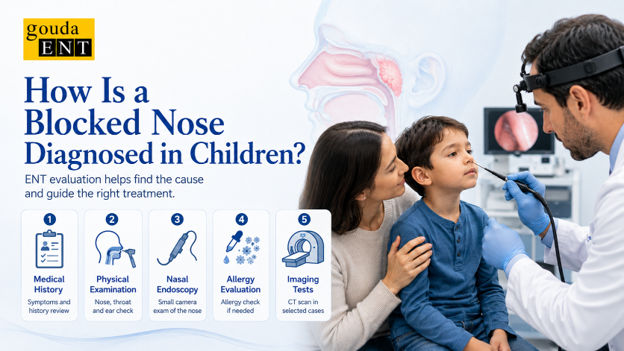
How Is a Blocked Nose Diagnosed in Children?
To find the cause of a blocked nose in children, an ENT specialist may perform a detailed evaluation based on the child’s symptoms, medical history, and overall health condition. A proper diagnosis helps identify whether the blocked nose in children is caused by allergies, enlarged adenoids, sinus issues, infections, or other nasal conditions. Common diagnostic methods include:
Medical History: The doctor discusses symptoms, allergies, previous infections, and the child’s medical history to understand the possible cause.
Physical Examination: The nose, throat, and ears are examined to check for signs of blockage, inflammation, or infection.
Nasal Endoscopy: A small camera is used to examine the nasal passages and identify problems such as enlarged adenoids, a deviated septum, or a foreign object.
Allergy Evaluation (If Needed): Allergy tests may be suggested when symptoms are related to allergic rhinitis or other allergic conditions.
Imaging Tests (Selected Cases): A CT scan may be recommended only for specific or long-term nasal problems where more detailed evaluation is required.
Early diagnosis helps identify the reason behind the stuffy nose and allows the ENT specialist to provide suitable treatment and care based on the child’s needs.
Treatment Options for a Blocked Nose in Children
| Treatment Type | Treatment Option | How It Helps |
|---|---|---|
| Home Care | Saline Nasal Drops | Helps loosen mucus and keeps the nasal passages clear. |
| Adequate Hydration | Keeps mucus thin and helps easier drainage. | |
| Medical Treatment | Allergy Medicines | Helps manage nasal blockage caused by allergies such as allergic rhinitis. |
| Nasal Sprays | May reduce swelling inside the nose and improve airflow when advised by a doctor. | |
| Antibiotics | Used only when a bacterial infection is confirmed. | |
| Treatment Procedures (These procedures are considered only after non-surgical options fail and a specialist evaluation confirms the need.) | Adenoid Removal | May improve breathing when enlarged adenoids block the nasal airway. |
| Foreign Body Removal | Removes objects stuck inside the nose safely. | |
| Septoplasty | Helps correct a deviated nasal septum that affects airflow. |
How to Choose the Right Hearing Aid for Your Hearing Loss
Choosing the right hearing aid begins with a comprehensive hearing evaluation. The results help determine the most suitable option based on your hearing ability, lifestyle, and daily communication needs. For individuals experiencing hearing difficulties, selecting the right hearing aid depends on factors such as the level of hearing loss, comfort, technology features, and everyday requirements. An ENT specialist or hearing care professional can recommend the best hearing aid option after a detailed assessment.
- Type and Degree of Hearing Loss: The type and severity of your hearing loss play an important role in selecting the right device.
- Lifestyle: Your daily activities and listening environments help determine which option best suits your needs.
- Comfort and Fit: Choose a device that fits comfortably and matches your ear anatomy for long-term use.
- Technology and Features: Features such as Bluetooth connectivity, noise reduction, and rechargeable batteries can improve your listening experience.
- Hearing Test Results: Your audiometry and audiogram help identify the most appropriate hearing solution for your hearing needs. This evaluation is typically conducted by an audiologist working alongside your ENT specialist.
What to Expect After Choosing a Hearing Aid
- Hearing Aid Fitting: Your hearing test (audiometry) and audiogram help. Your ENT specialist and audiologist work together to adjust the hearing aid to suit your hearing needs.
- Adjustment Period: It may take a few weeks for your brain to adapt to new sounds, so wearing your hearing aid regularly is important.
- Modern Features: Depending on your hearing needs, digital hearing aids may include Bluetooth connectivity, rechargeable batteries, noise reduction, and tinnitus support.
- Daily Care: Clean your hearing aid regularly, keep it dry, and follow the care instructions to maintain its performance.
- Follow-up Visits: Regular reviews help your ENT specialist fine-tune your hearing aid and ensure it continues to provide the best hearing support.
Doctor’s Advice: At Gouda Ramesh ENT Hospital, our ENT specialists provide comprehensive hearing evaluations and long-term hearing support in Kukatpally to help you get the most from your hearing aid and maintain long-term hearing health.
When Should You See an ENT Specialist for Hearing Problems?
If you notice changes in your hearing, don’t ignore them. Early evaluation can help identify the cause and guide the right treatment.
You should consider seeing an ENT specialist if you:
- Have difficulty hearing conversations, especially in noisy places.
- Notice sudden hearing loss in one or both ears.
- Experience ringing or buzzing in your ears (tinnitus) that doesn’t improve.
- Have ear pain, ear discharge, or a blocked ear along with hearing problems.
- Feel dizzy or have balance problems with changes in your hearing.
- Often ask people to repeat themselves or keep increasing the TV or phone volume.
Why Choose Gouda Ramesh ENT Hospital
| Experienced ENT Specialists 19+ years of experience in diagnosing and treating ENT conditions. | Comprehensive Hearing Evaluation Detailed hearing evaluations to identify the cause and severity of hearing loss. |
| Personalized Hearing Care Treatment plans tailored to your hearing needs and lifestyle. | Advanced Diagnostic Technology Modern diagnostic tools for accurate evaluation and treatment planning. |
| Complete ENT Care Expert care for hearing loss, tinnitus, ear infections, sinus, nose, and throat conditions. | Convenient Locations Our team of ENT specialists and hearing care providers offer complete, personalized hearing support in Kukatpally |
Details:
| Gouda Ramesh ENT Hospital – Kukatpally | 4th Floor, Pillar #867, KKR Building, Y Junction, beside Balanagar Metro Station, Pragathi Nagar,Kukatpally, Hyderabad,Telangana 500072 Phone: +91 95505 74871 |
For more details about branch’s visit :- https://www.goudaent.in/branches