 +91 95505 74871


Types of Hearing Aids: How to Choose the Right Hearing Aid for Your Needs
What Are Hearing Aids?
A hearing aid is a small electronic device designed to help people with hearing loss hear sounds more clearly and comfortably. There are different types of hearing aids available, designed to suit various levels of hearing loss, comfort preferences, and lifestyle needs.
A hearing aid does not restore normal hearing, but it can improve the way a person receives and understands sounds. Choosing the right hearing aid depends on the type and severity of hearing loss, daily activities, personal preferences, and hearing test results. Understanding the different types of hearing aids can help individuals make an informed decision with guidance from an audiologist or hearing specialist.
How Does a Hearing Aid Work?
| Sound Collection ➜ | Sound Processing ➜ | Sound Delivery |
| The microphone captures sounds from the surroundings, including voices and environmental sounds. | Digital Processor analyses and adjusts sounds based on the person’s hearing needs. | Speaker delivers the processed sound into the ear for clearer hearing |
Who May Need a Hearing Aid?
You may benefit from a hearing aid if you have:
- Mild Hearing Loss: Difficulty hearing soft voices or conversations in noisy places.
- Moderate Hearing Loss: Regularly asking people to repeat themselves during conversations.
- Severe Hearing Loss: Difficulty understanding most conversations without hearing amplification.
- Age-Related Hearing Loss (Presbycusis): Gradual hearing loss that commonly develops as people grow older — WHO reports that over 25% of adults over 60 have disabling hearing loss.
- Noise-Induced Hearing Loss: Hearing damage caused by long-term exposure to loud noise or sudden loud sounds. The WHO notes that over a billion young people are at risk from unsafe listening habits like loud headphone use.
What are the warning signs you need a hearing aid?
Don’t ignore changes in your hearing. An early hearing evaluation can identify the cause and help you receive the right treatment.
- Frequently asking people to repeat themselves, even in quiet conversations.
- Turning up the TV or phone volume louder than others find comfortable.
- Finding it difficult to hear conversations in crowded or noisy places.
- Hearing ringing or buzzing in the ears (tinnitus) along with hearing difficulties.
- Feeling that people are mumbling or not speaking clearly during conversations .
Doctor’s Note: In our experience, many patients wait months after first noticing symptoms like asking others to repeat themselves — often assuming it’s just background noise or age. Earlier evaluation usually means a wider range of hearing aid options and an easier adjustment period.
How to Choose the Right Hearing Aid for Your Hearing Loss
Choosing the right hearing aid begins with a comprehensive hearing evaluation. The results help determine the most suitable option based on your hearing ability, lifestyle, and daily communication needs.
- Type and Degree of Hearing Loss: The type and severity of your hearing loss play an important role in selecting the right device.
- Lifestyle: Your daily activities and listening environments help determine which option best suits your needs.
- Comfort and Fit: Choose a device that fits comfortably and matches your ear anatomy for long-term use.
- Technology and Features: Features such as Bluetooth connectivity, noise reduction, and rechargeable batteries can improve your listening experience.
- Hearing Test Results: Your audiometry and audiogram help identify the most appropriate hearing solution for your hearing needs. This evaluation is typically conducted by an audiologist working alongside your ENT specialist.
What to Expect After Choosing a Hearing Aid
- Hearing Aid Fitting: Your hearing test (audiometry) and audiogram help. Your ENT specialist and audiologist work together to adjust the hearing aid to suit your hearing needs.
- Adjustment Period: It may take a few weeks for your brain to adapt to new sounds, so wearing your hearing aid regularly is important.
- Modern Features: Depending on your hearing needs, digital hearing aids may include Bluetooth connectivity, rechargeable batteries, noise reduction, and tinnitus support.
- Daily Care: Clean your hearing aid regularly, keep it dry, and follow the care instructions to maintain its performance.
- Follow-up Visits: Regular reviews help your ENT specialist fine-tune your hearing aid and ensure it continues to provide the best hearing support.
Doctor’s Advice: At Gouda Ramesh ENT Hospital, our ENT specialists provide comprehensive hearing evaluations and long-term hearing support in Kukatpally to help you get the most from your hearing aid and maintain long-term hearing health.
When Should You See an ENT Specialist for Hearing Problems?
If you notice changes in your hearing, don’t ignore them. Early evaluation can help identify the cause and guide the right treatment.
You should consider seeing an ENT specialist if you:
- Have difficulty hearing conversations, especially in noisy places.
- Notice sudden hearing loss in one or both ears.
- Experience ringing or buzzing in your ears (tinnitus) that doesn’t improve.
- Have ear pain, ear discharge, or a blocked ear along with hearing problems.
- Feel dizzy or have balance problems with changes in your hearing.
- Often ask people to repeat themselves or keep increasing the TV or phone volume.
Why Choose Gouda Ramesh ENT Hospital
| Experienced ENT Specialists 19+ years of experience in diagnosing and treating ENT conditions. | Comprehensive Hearing Evaluation Detailed hearing evaluations to identify the cause and severity of hearing loss. |
| Personalized Hearing Care Treatment plans tailored to your hearing needs and lifestyle. | Advanced Diagnostic Technology Modern diagnostic tools for accurate evaluation and treatment planning. |
| Complete ENT Care Expert care for hearing loss, tinnitus, ear infections, sinus, nose, and throat conditions. | Convenient Locations Our team of ENT specialists and hearing care providers offer complete, personalized hearing support in Kukatpally |
Details:
| Gouda Ramesh ENT Hospital – Kukatpally | 4th Floor, Pillar #867, KKR Building, Y Junction, beside Balanagar Metro Station, Pragathi Nagar,Kukatpally, Hyderabad,Telangana 500072 Phone: +91 95505 74871 |
For more details about branch’s visit :- https://www.goudaent.in/branches
Frequently Asked Questions About Hearing Aids
1. What are the different types of hearing aids available?
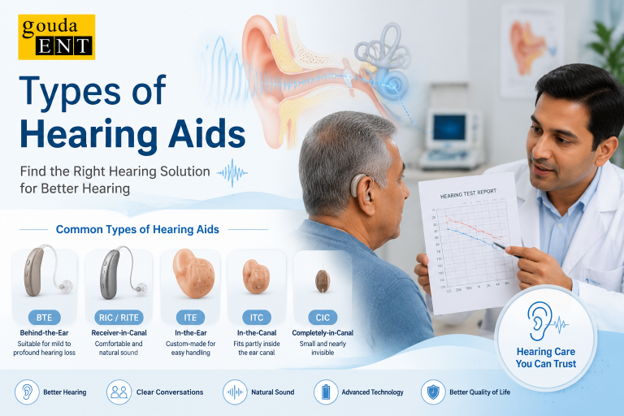
Hearing aids are available in different styles, including Behind-the-Ear (BTE), Receiver-in-Canal (RIC), In-the-Ear (ITE), In-the-Canal (ITC), Completely-in-Canal (CIC), and other specialized devices. The right type depends on your hearing loss, comfort, lifestyle, and hearing test results.
2. How do I know which hearing aid is right for me?
The right hearing aid depends on the type and severity of your hearing loss, daily activities, ear anatomy, and personal needs. An ENT specialist can recommend the most suitable option after a comprehensive hearing evaluation.
3. Can hearing aids restore normal hearing?
No, hearing aids cannot restore normal hearing or cure hearing loss. They are designed to improve sound clarity, communication, and your ability to participate in daily activities.
4. Who needs a hearing aid?
People with mild, moderate, or severe hearing loss who experience difficulty understanding conversations, hearing in noisy environments, or communicating with others may benefit from hearing aids after proper evaluation.
5. How long does it take to adjust to a new hearing aid?
It may take a few weeks to adjust to a hearing aid as your brain becomes familiar with amplified sounds. Regular use and follow-up adjustments can help improve comfort and hearing experience.
6. Are digital hearing aids better than traditional hearing aids?
Modern digital hearing aids can provide improved sound processing, noise reduction, and speech clarity compared with older technologies. However, the best choice depends on your individual hearing needs.
7. Do I need one hearing aid or two hearing aids?
If hearing loss affects both ears, using two hearing aids may help improve sound awareness, speech understanding, and listening balance. Your ENT specialist can guide you based on your hearing evaluation.
8. Can hearing aids help with ringing in the ears (tinnitus)?
Some people with hearing loss and tinnitus may experience improvement in hearing comfort with hearing aids. A proper evaluation helps determine the most suitable management approach
9.Where can I get hearing evaluation and hearing loss treatment in Kukatpally?
At Gouda Ramesh ENT Hospital, our ENT specialists provide comprehensive hearing evaluations and personalized hearing loss treatment in Kukatpally to identify the cause of hearing difficulties and recommend appropriate care.
10. When should I consult an ENT specialist for hearing problems?
You should consult an ENT specialist if you notice persistent hearing difficulties, sudden hearing changes, ear pain, ear discharge, tinnitus, or difficulty understanding conversations.