 +91 95505 74871



Nose bleeding is a sudden flow of blood from one or both nostrils. Moreover, it looks scary, yet it is usually harmless. In fact, most nosebleeds stop with simple first aid at home. Therefore, staying calm is the first and best step.
However, some cases need a doctor’s help quickly. Furthermore, frequent or heavy bleeding can point to a deeper problem. Hence, this guide explains how to stop, prevent, and treat it.
| ⚠ GET URGENT MEDICAL HELP IF The bleeding does not stop after 20 minutes of firm pressure.The blood loss is very heavy or you feel faint.The nosebleed follows a head injury or a hard blow.There is breathing trouble, or you are on blood thinners. In these cases, go to the nearest hospital or call emergency services right away. |
What Is Nose Bleeding (Epistaxis)?
Nose bleeding, also called epistaxis, happens when tiny blood vessels in the nose break. Basically, the nasal lining is thin and rich in blood vessels. Additionally, even a small scratch can start a bleed. Sometimes, dry air alone is enough to trigger it.
However, not all nosebleeds are the same. Moreover, the location decides how serious the bleed is. Therefore, doctors group them into two main types.
Anterior vs Posterior Nosebleeds
Anterior nosebleeds start at the front of the nose. Generally, they are common, mild, and easy to control. Meanwhile, posterior nosebleeds come from deeper at the back. Consequently, they are heavier and more common in adults. Besides, posterior bleeds often need a doctor’s care.
How to Stop a Nosebleed: Step by Step
Knowing how to stop a nosebleed brings quick, calm relief. Therefore, follow these simple steps in order:
- Sit upright and lean slightly forward.
- Pinch the soft part of the nose firmly.
- Breathe through your mouth while pinching.
- Hold the pinch for 10 to 15 minutes.
- Spit out any blood, do not swallow it.
- Apply a cold pack on the nose bridge.
Afterwards, release the pinch gently and check the bleeding. However, if it continues, repeat the pressure once more. Moreover, avoid blowing or touching the nose for some hours.
What NOT to Do During a Nosebleed
Some common habits actually make nose bleeding worse. Therefore, avoid these mistakes:
Do not keep checking every minute.
Do not tilt the head backwards.
Do not lie down flat.
Do not pack tissue deep inside the nose.
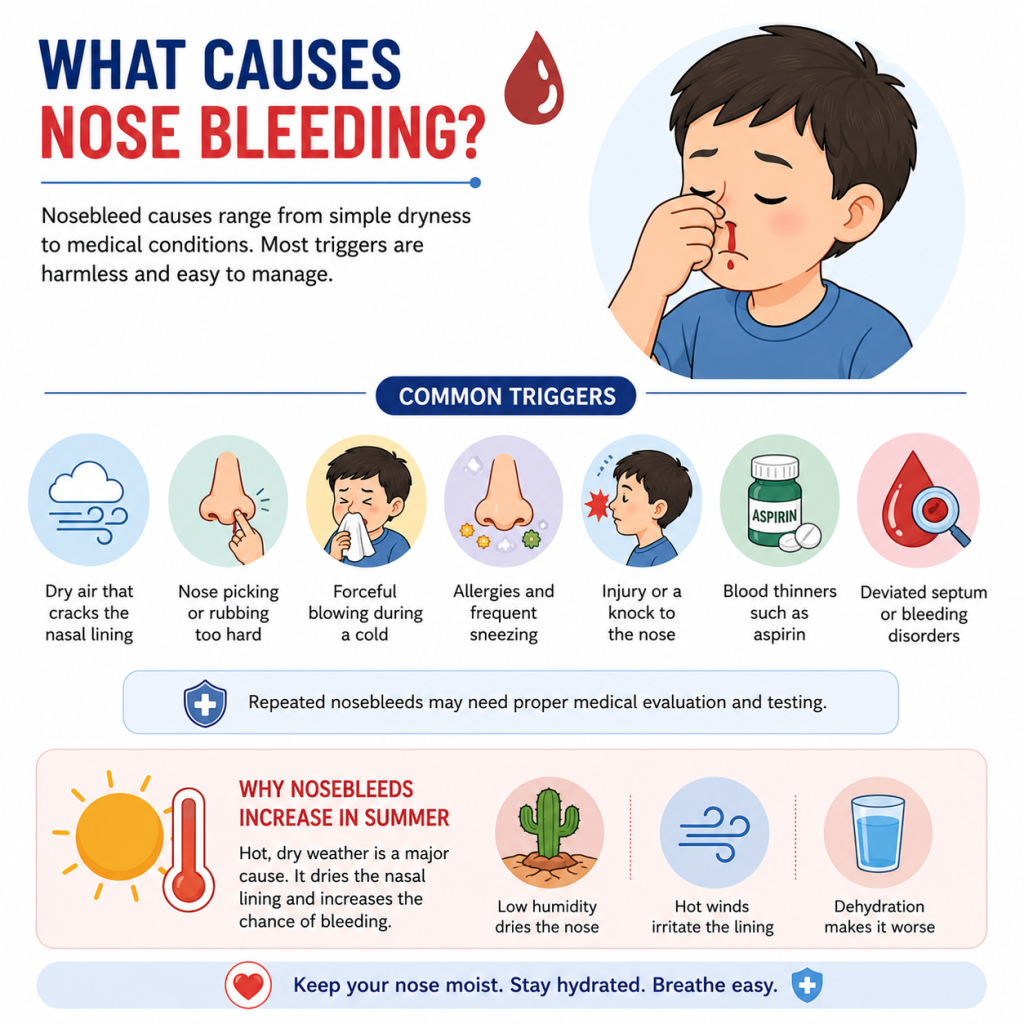
What Causes Nose Bleeding?
Nosebleed causes range from simple dryness to medical conditions. However, most triggers are harmless and easy to manage. Below are the most common ones.
Common Triggers
- Dry air that cracks the nasal lining.
- Nose picking or rubbing too hard.
- Forceful blowing during a cold.
- Allergies and frequent sneezing.
- Injury or a knock to the nose.
- Blood thinners such as aspirin.
Furthermore, a deviated septum can make bleeds more likely. Additionally, certain bleeding disorders raise the risk. Consequently, repeated nosebleeds sometimes need proper testing.
Why Nosebleeds Increase in Summer
Hot, dry weather is a major trigger in our region. Specifically, summer heat dries the delicate nasal lining. Therefore, the blood vessels crack and bleed easily. Moreover, air-conditioning adds to the dryness indoors. Hence, nose bleeding in summer is very common across Hyderabad.
Nose Bleeding in Children
Nose bleeding in children worries many parents, yet it is usually mild. Moreover, kids often pick or rub their noses. Besides, dry air and colds add to the problem. Generally, these bleeds stop quickly with gentle pressure.
Special Care for Kids
First, sit the child on your lap and lean them forward. Next, pinch the soft nose and stay calm. Meanwhile, reassure the child to ease the fear. However, do not put petroleum jelly inside a child’s nose. Instead, use a saline spray or a child-safe gel.
Frequent Nosebleeds: When to Worry
Frequent nosebleeds need more attention than a one-off bleed. Therefore, repeated episodes deserve a proper check-up. Moreover, they may hide a treatable cause.
When to See a Doctor for Nosebleeds
You should see a nose specialist in these situations:
- The bleeding returns again and again.
- Each bleed is heavy or lasts long.
- You also bruise or bleed elsewhere easily.
- A child under two years has a nosebleed.
In such cases, do not ignore the pattern. Instead, book a visit with a trusted ENT specialist in Hyderabad. You can read more on our nose bleeding treatment page.
Epistaxis Treatment by an ENT
Epistaxis treatment starts with finding the exact bleeding point. Moreover, an ENT doctor uses a small endoscope to look inside. Then, the right method stops the bleed safely.
How an ENT Stops the Bleeding
Doctors choose the method to suit the cause. Specifically, the main options include:
- Cautery seals the broken vessel with heat or silver nitrate.
- Nasal packing applies gentle pressure inside the nose.
- Medicated sprays shrink and calm the vessels.
- Treating the cause, such as allergy or a septum problem.
Furthermore, a nose allergy doctor can manage allergy-driven bleeds. Consequently, the right care lowers the chance of return.
How to Prevent Nose Bleeding
Prevention works far better than repeated first aid. Therefore, follow these simple habits daily:
- Use a saline spray to keep the nose moist.
- Run a humidifier in dry or air-conditioned rooms.
- Drink enough water through the day.
- Avoid picking or blowing the nose hard.
- Manage allergies with proper treatment.
Moreover, teach children these gentle habits early. Consequently, you reduce nosebleeds for the whole family.
Why Choose Gouda ENT Hospital
At Gouda Ramesh ENT Hospital, we treat nose bleeding with quick, expert care. Moreover, Dr. Gouda Ramesh brings over 19 years of ENT experience. Furthermore, our team uses modern endoscopy and gentle cautery for lasting results. Therefore, families across Hyderabad trust us for safe relief.
Conclusion
Nose bleeding is common, and most cases end quickly at home. Moreover, calm first aid stops the bleed in minutes. Remember the red flags: heavy, long, or injury-linked bleeds need urgent care. Therefore, never tilt back, and pinch the nose correctly. With expert help, frequent nosebleeds can be controlled for good.
Frequently Asked Questions
How long should I pinch my nose to stop a nosebleed?
Pinch the soft part of the nose firmly for 10 to 15 minutes without checking. Lean forward and breathe through the mouth. Most nosebleeds stop in this time.
Should I tilt my head back during a nosebleed?
No. Tilting the head back lets blood flow into the throat, which may cause choking or vomiting. Always lean slightly forward instead.
Why does my child get frequent nosebleeds?
In children, dry air, nose picking, colds, and allergies are common causes. Most are harmless, but frequent nosebleeds should be checked by an ENT doctor.
Are nosebleeds more common in summer?
Yes. Hot, dry air dries the nasal lining and makes blood vessels fragile. Therefore, nose bleeding rises during the summer months.
When is a nosebleed an emergency?
Seek urgent care if bleeding does not stop after 20 minutes of pressure, is very heavy, follows a head injury, or comes with dizziness or breathing trouble.
How does an ENT stop frequent nose bleeding?
An ENT finds the bleeding point with an endoscope, then seals it by cautery or places nasal packing. They also treat the cause to prevent it returning.


https://shorturl.fm/uZpvt