 +91 95505 74871


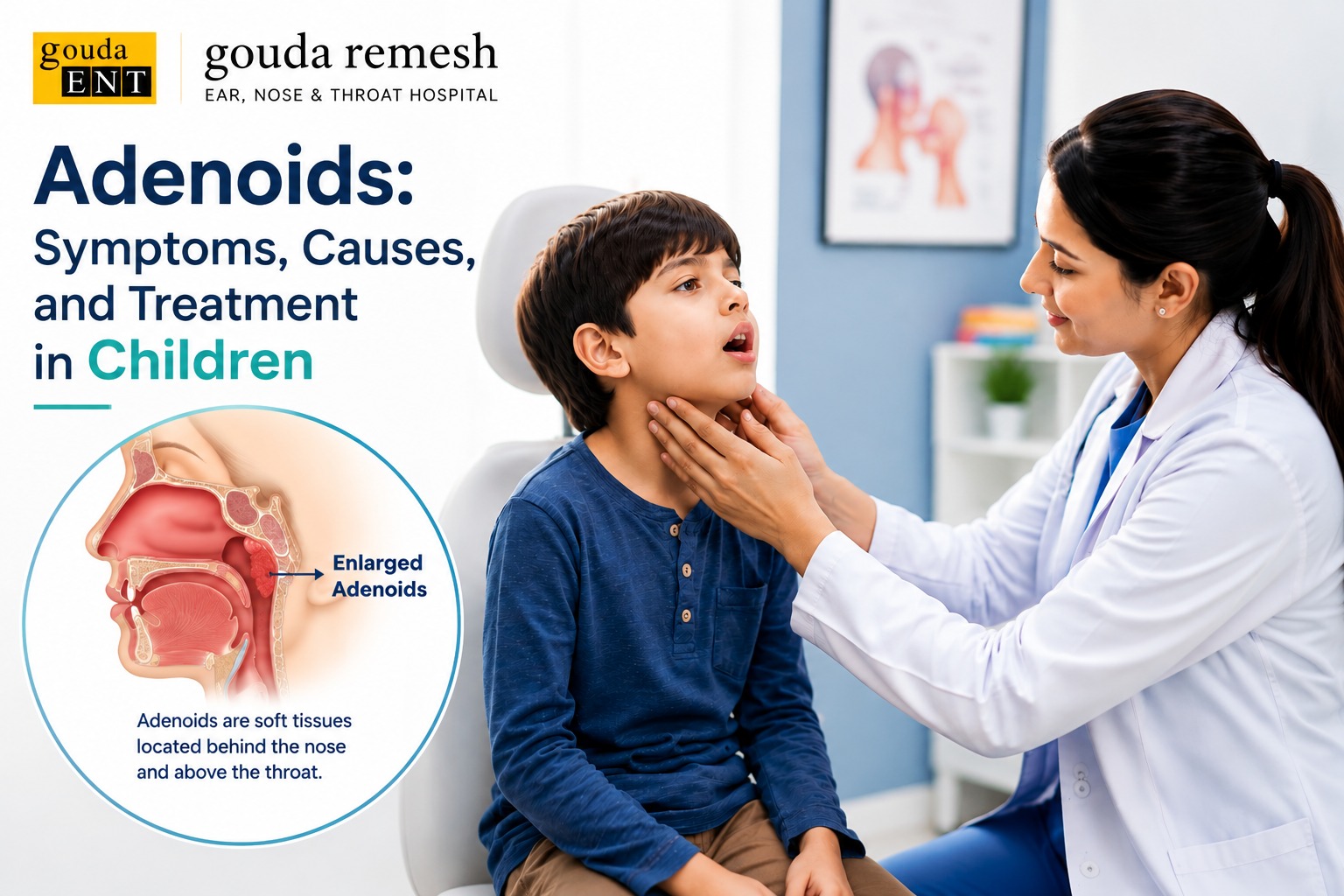
Adenoids are small patches of tissue that sit behind the nose, at the top of the throat. Moreover, they form part of a child’s immune system. In fact, they trap germs that enter through the nose and mouth. Therefore, they protect young children from infection.
However, this tissue can sometimes swell and cause trouble. Furthermore, swollen ones may block the nose and ears. Hence, this guide explains the signs, causes, and treatment in simple words.
What Are Adenoids?
Adenoids are soft, spongy lumps of lymphatic tissue. Basically, they sit high in the throat, just behind the nose. Additionally, they work closely with the tonsils. Together, this tissue traps germs as a child grows.
However, you cannot see this tissue during a normal throat check. Moreover, they stay hidden behind the nasal passage. Generally, they grow largest between ages three and five. After that, they slowly shrink on their own.
Where Are the Adenoids Located?
The adenoids rest at the back of the nasal cavity. Specifically, they sit above the roof of the mouth. Therefore, an ENT doctor needs a small camera to view them. Doctors call this hidden area the nasopharynx.
What Are Enlarged Adenoids?
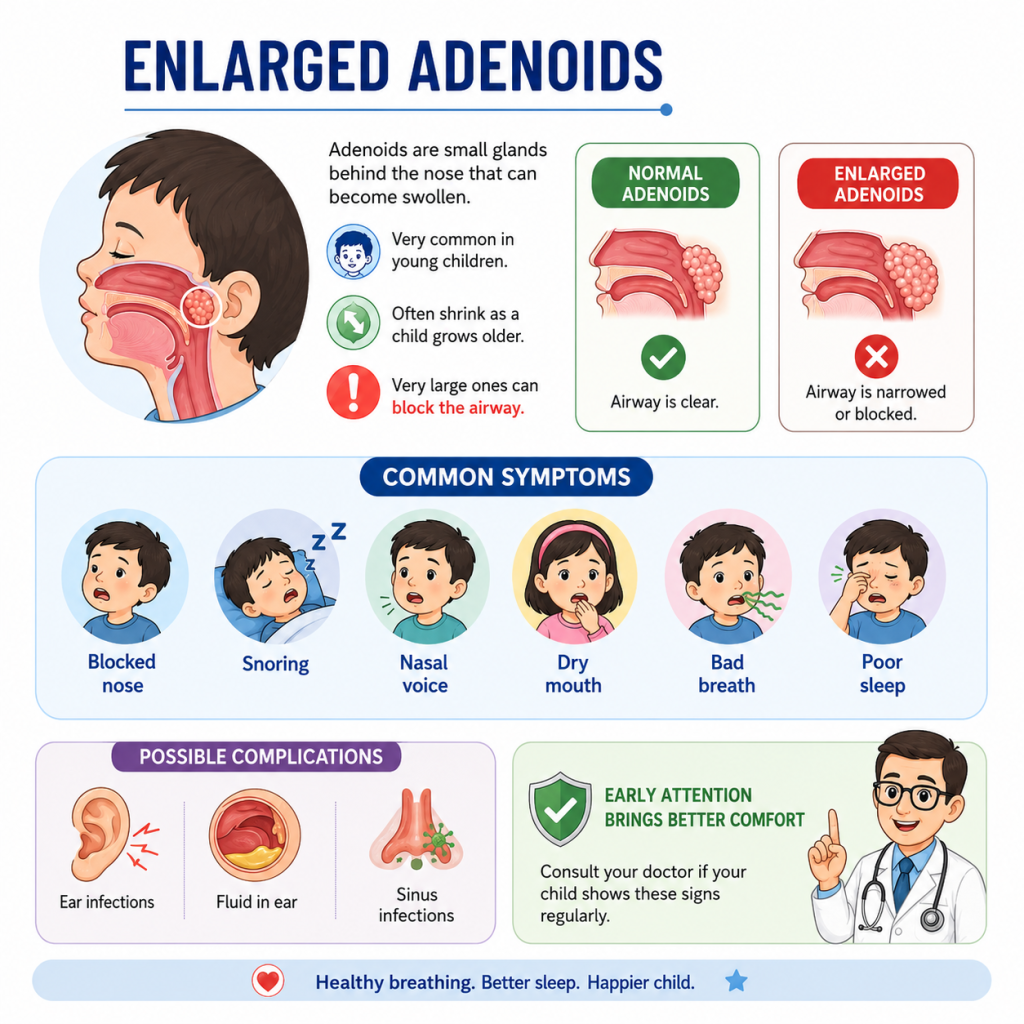
Enlarged adenoids are simply glands that have become swollen. Moreover, doctors also call this condition adenoid hypertrophy. Besides, the problem stays very common in young children. Sometimes, a child is even born with large ones.
However, swollen adenoids often shrink as a child grows older. Meanwhile, very large ones can block the airway. Consequently, breathing and sleep may suffer. Hence, parents should watch for early warning signs.
Symptoms of Enlarged Adenoids
The symptoms usually appear slowly. Therefore, many parents notice them at night first. However, the signs grow clearer over time. Below are the most common ones to watch.
- Blocked nose: the child breathes through the mouth.
- Snoring: night breathing turns loud and broken.
- Nasal voice: speech sounds blocked or muffled.
- Dry mouth: constant mouth breathing dries the lips.
- Bad breath: trapped germs cause a stale odour.
- Poor sleep: restless nights bring daytime tiredness.
Furthermore, some children face frequent ear infections. Additionally, fluid may build up behind the eardrum. Consequently, hearing can drop for a while. Besides, repeated sinus infections may also follow.
When Should You See a Doctor?
You should see an ENT doctor if symptoms last for weeks. Likewise, loud snoring with breathing pauses needs quick care. Moreover, repeated ear infections or hearing trouble demand attention. In such cases, early help protects your child.
What Causes Swollen Adenoids?
Swollen adenoids usually result from infection or allergy. However, the exact trigger differs from child to child. Besides, the tissue often stays large even after an infection clears. Therefore, several factors raise the risk.
Common Risk Factors
Several conditions make this swelling more likely. Specifically, the following factors stand out:
- Frequent throat or nose infections.
- Allergies, which keep the tissue inflamed.
- Exposure to smoke or air pollution.
- A family history of similar problems.
- Naturally large tissue present from birth.
Moreover, viruses and bacteria both play a part. In addition, ongoing inflammation keeps the glands swollen. Consequently, the tissue may not shrink as expected.
Adenoiditis: When Adenoids Get Infected
Adenoiditis means the tissue becomes infected and inflamed. Moreover, germs trapped in the tissue trigger this problem. As a result, the child may get fever, sore throat, and a blocked nose. Sometimes, the infection returns again and again.
However, doctors can treat most cases with simple medicine. Meanwhile, repeated adenoiditis may need a closer review. Therefore, an ENT check helps find the right plan.
How Doctors Diagnose Adenoid Problems
Diagnosis usually starts with a simple talk and exam. First, the doctor asks about sleep, breathing, and infections. Next, a small camera checks the adenoid tissue. This test stays quick and painless for the child.
Furthermore, an X-ray may show the size of the tissue. Sometimes, a sleep study checks for breathing pauses at night. Therefore, doctors plan treatment using clear, accurate findings.
Treatment for Enlarged Adenoids
Treatment depends on the symptoms and the child’s age. Moreover, mild cases often need no treatment at all. Generally, doctors begin with medicines first. However, surgery helps when symptoms stay severe.
Medicines and Simple Care
Doctors usually try gentle remedies as the first step. Specifically, these options tend to help:
- Nasal steroid sprays reduce swelling gently.
- Antibiotics clear any bacterial infection.
- Saline rinses ease a blocked nose.
- Allergy care lowers ongoing inflammation.
Watchful Waiting
Sometimes, doctors simply watch and wait. Basically, this tissue shrinks naturally with age. Therefore, many children improve without any surgery. Meanwhile, regular reviews track the progress safely.
Adenoidectomy: Adenoid Removal Surgery
Sometimes, medicines alone do not bring relief. In such cases, surgeons gently remove the adenoids. Doctors call this operation an adenoidectomy. Furthermore, it ranks among the most common childhood surgeries.
Often, the surgeon removes the tonsils at the same time. Moreover, modern, gentle techniques make the procedure smooth. Therefore, most children recover quickly and safely.
Recovery After Adenoidectomy
Recovery after an adenoidectomy usually stays fast. However, a mild sore throat may last a few days. Meanwhile, soft foods and plenty of fluids help a lot. Besides, the glands rarely grow back after removal.
Can You Prevent Adenoid Problems?
You cannot always prevent these problems fully. However, a few simple habits lower the risk. Moreover, they support better breathing and sleep. Below are easy steps that help.
- Treat colds and allergies early.
- Keep the home free of smoke.
- Encourage regular handwashing.
- Maintain clean, fresh indoor air.
Therefore, steady care protects your child’s airway. In addition, it lowers the chance of repeat infections.
Why Choose Gouda ENT Hospital
At Gouda Ramesh ENT Hospital, we treat adenoid problems with gentle, child-friendly care. Moreover, Dr. Gouda Ramesh brings over 19 years of ENT experience. Furthermore, our team uses advanced coblator-assisted surgery for safe results. Therefore, parents across Hyderabad trust our outcomes.
Conclusion
Enlarged adenoids are common, yet they remain very treatable. Moreover, early diagnosis brings far faster relief. With the right medicines or a simple surgery, most children breathe and sleep well again. Therefore, do not ignore lasting symptoms. Instead, consult an expert ENT doctor soon.
FAQ’s
At what age do adenoids shrink?
This tissue grows largest between ages three and five. After that, it slowly shrinks, and it is usually almost gone by the teenage years.
Are enlarged adenoids dangerous?
Enlarged adenoids are not cancerous. However, large ones can block breathing, disturb sleep, and cause ear or sinus problems, so they need review.
Is adenoid removal surgery safe for children?
Yes. Adenoidectomy is one of the most common, safe childhood surgeries. Moreover, modern techniques make recovery quick and comfortable.
Do adenoids grow back after surgery?
They rarely grow back after an adenoidectomy. In a few cases, small regrowth happens, so the doctor may suggest a follow-up review.
Can enlarged adenoids cause ear problems?
Yes. The swollen tissue can block the tubes that drain the ear. Consequently, fluid builds up, leading to infections and temporary hearing loss.
Can medicine shrink adenoids without surgery?
Nasal steroid sprays and allergy care reduce swelling in many children. However, severe or repeated problems may still need surgery.
https://shorturl.fm/XR9rD
What i don’t understood is in fact how you’re now not actually much
more well-appreciated than you might be right now. You are very intelligent.
You recognize thus considerably in terms of this matter, produced me personally imagine it from numerous
numerous angles. Its like men and women are not interested except it’s one thing to accomplish with Girl gaga!
Your individual stuffs nice. All the time handle it up!