 +91 95505 74871



An ENT (Ear, Nose, and Throat) specialist, also known as an otolaryngologist, is trained to diagnose and treat a wide range of conditions affecting these interconnected areas.
Common Conditions Treated
- Ear infections and hearing loss
- Sinusitis and chronic nasal congestion
- Throat infections and voice disorders
- Balance disorders and dizziness
- Allergies affecting the respiratory system
ENT specialists use advanced diagnostic tools and treatment methods to manage both simple and complex conditions effectively.
When to See an ENT Specialist for Ear Problems
Ear-related issues are often overlooked until they become severe. However, early consultation can prevent complications such as hearing loss or chronic infections.
Warning Signs for Ear Issues
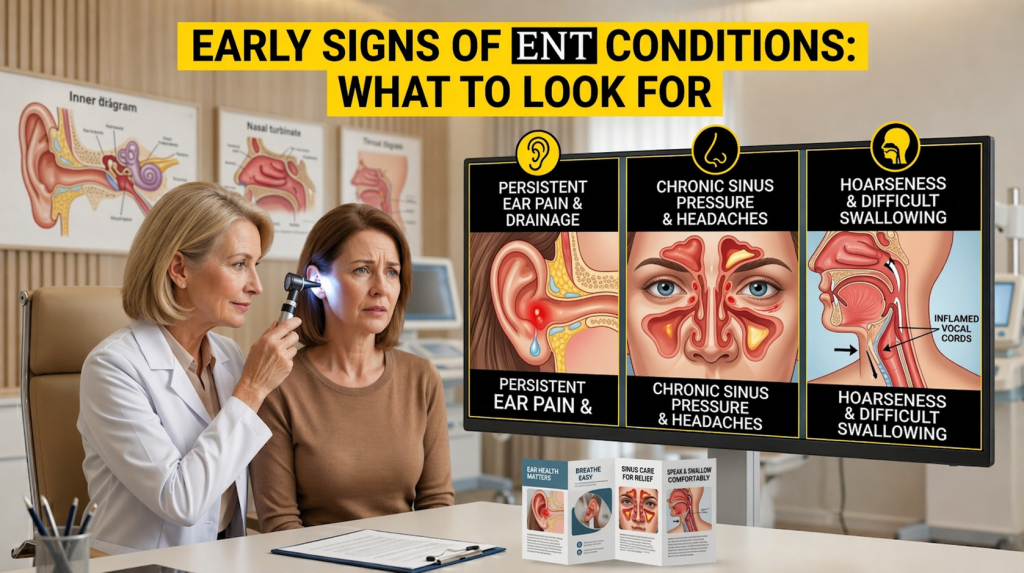
- Persistent or recurring ear pain
- Hearing loss or a feeling of blocked ears
- Ringing or buzzing sounds in the ears (tinnitus)
- Fluid or pus discharge from the ear
- Dizziness or problems with balance
These symptoms may indicate infections, earwax buildup, or more serious conditions affecting the inner ear. Ignoring them can lead to long-term damage, so timely medical attention is important.
When to See an ENT Specialist for Nose Issues
Nasal problems can affect breathing, sleep quality, and overall comfort. Many individuals suffer from chronic nasal issues without realizing they need medical care.
Signs You Need Medical Attention
- Frequent or recurring sinus infections
- Persistent nasal congestion or blockage
- Difficulty breathing through the nose
- Frequent nosebleeds
- Allergies that do not respond to treatment
These symptoms may be caused by sinusitis, a deviated nasal septum, nasal polyps, or allergic conditions. An ENT specialist can identify the root cause and provide effective treatment.
When to See an ENT Specialist for Throat Conditions
Throat problems can interfere with essential daily activities such as speaking, eating, and breathing. While occasional throat discomfort is common, persistent symptoms should not be ignored.
Symptoms You Should Not Ignore
- Sore throat lasting more than a few days
- Difficulty swallowing or pain while swallowing
- Hoarseness or changes in voice
- Chronic cough
- Swelling or lumps in the throat
These symptoms may indicate infections, tonsillitis, or even more serious conditions that require professional evaluation.
Symptoms You Should Never Ignore
Some symptoms require immediate medical attention, as they may indicate serious underlying conditions. Knowing when to see an ENT specialist can help you take prompt action and avoid complications.
Critical Warning Signs
- Severe ear pain accompanied by fever
- Sudden or unexplained hearing loss
- Continuous or heavy nasal bleeding
- Difficulty breathing or shortness of breath
- Severe dizziness or loss of balance
If you experience any of these symptoms, it is important to seek immediate care at a specialized ENT center.
Benefits of Early ENT Consultation
Seeking medical care at the right time offers several important advantages and can significantly improve treatment outcomes.
Key Benefits
- Early detection of underlying conditions
- Faster and more effective treatment
- Reduced risk of complications
- Avoidance of advanced or invasive procedures
- Improved quality of life
Early intervention not only helps in quicker recovery but also prevents minor issues from becoming major health problems.
Why Choose Gouda ENT Hospital?
Choosing the right healthcare provider is crucial for accurate diagnosis and successful treatment.
At Gouda ENT Hospital, patients benefit from:
- Experienced and skilled ENT specialists
- Advanced diagnostic and treatment technologies
- Personalized treatment plans based on individual needs
- Comprehensive care for all ENT conditions under one roof
This ensures that patients receive high-quality care and effective treatment for both common and complex ENT problems.
How Often Should You See an ENT Specialist?
Routine visits to an ENT specialist are not always necessary unless you have ongoing or recurring issues. However, you should consider consulting an ENT doctor if:
- Symptoms persist for more than a week
- Home remedies do not provide relief
- You experience repeated infections
- You notice sudden or severe symptoms
Regular check-ups may also be beneficial for individuals with chronic ENT conditions or allergies.
Understanding when to see an ENT specialist is essential for maintaining good ear, nose, and throat health. While some symptoms may seem minor at first, ignoring them can lead to complications and long-term issues.
Early consultation ensures accurate diagnosis, timely treatment, and better recovery outcomes. Whether it’s persistent ear pain, chronic sinus problems, or ongoing throat discomfort, seeking expert care can make a significant difference.
1. When should I visit an ENT specialist?
You should visit an ENT specialist if symptoms like ear pain, sinus congestion, or throat issues last more than a few days or keep recurring.
2. Can ENT problems go away on their own?
Some mild ENT problems may resolve naturally, but persistent or severe symptoms require proper medical evaluation and treatment.
3. What are the warning signs that need immediate attention?
Sudden hearing loss, severe dizziness, difficulty breathing, and continuous bleeding are serious symptoms that require immediate medical care.
4. Do I need a referral to see an ENT specialist?
In most cases, you can consult an ENT specialist directly without needing a referral.
5. How do I know if my sinus problem is serious?
If sinus symptoms last more than 10 days, occur frequently, or cause severe pain and pressure, you should seek medical attention.
6. Is it necessary to see an ENT specialist for throat pain?
Yes, if throat pain persists, affects swallowing, or is accompanied by fever or voice changes, professional evaluation is recommended.
Don’t ignore the warning signs your body is giving you.


https://shorturl.fm/gEE6W
https://shorturl.fm/64MXd
https://shorturl.fm/3n6Su