


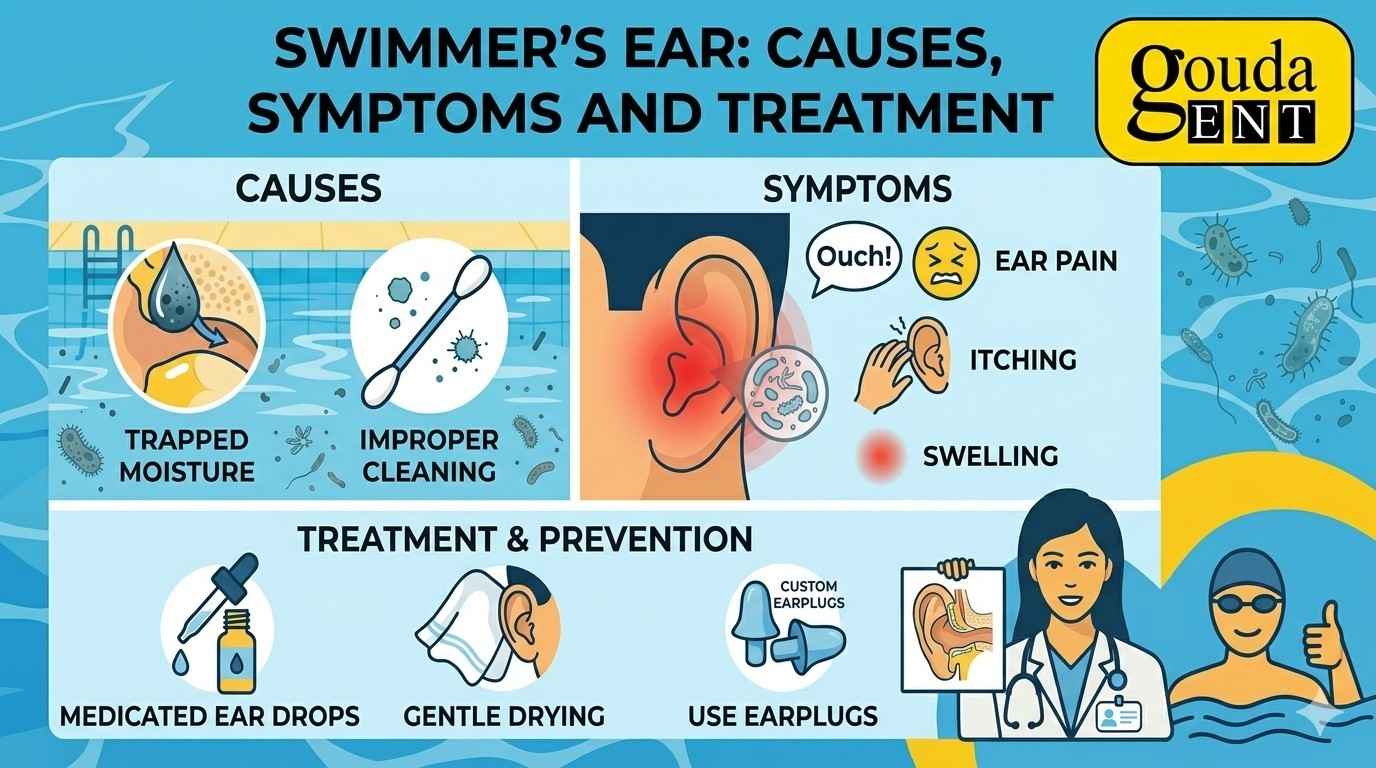
Swimmer’s Ear: Causes, Symptoms and Treatment is an important topic to understand, especially for those frequently exposed to water. Swimmer’s Ear is a common ear condition that occurs when the outer ear canal becomes infected or inflamed. This condition is medically known as Otitis Externa.
The presence of moisture inside the ear canal creates an ideal environment for bacteria and fungi to grow. As a result, the ear canal becomes irritated, leading to pain, swelling, and sometimes discharge.
Although the name suggests that it mainly affects swimmers, It can occur in anyone who frequently exposes their ears to water, humidity, or excessive cleaning with cotton swabs.
Early diagnosis and proper treatment are important to prevent complications and relieve discomfort.

What is a Swimmer’s Ear?
It is an infection of the outer ear canal that connects the outer ear to the eardrum. The condition occurs when water or moisture becomes trapped inside the ear canal, allowing bacteria to multiply.
Unlike middle ear infections, Swimmer’s Ear primarily affects the outer ear and surrounding skin. It can cause redness, swelling, itching, and significant ear pain.
People who swim frequently, live in humid environments, or use earphones for long periods may have a higher risk of developing this condition.
Causes of Swimmer’s Ear
Several factors can contribute to the development of Swimmer’s Ear. The most common cause is water that remains inside the ear canal after swimming or bathing.
Other possible causes include:
- Excess moisture inside the ear canal
- Swimming in contaminated water
- Injury to the ear canal from cotton swabs or fingernails
- Skin conditions such as eczema affecting the ear
- Using earbuds or hearing aids for extended periods
- Humid environments that promote bacterial growth
When the ear canal loses its natural protective barrier, bacteria and fungi can easily cause infection.
Swimmer’s Ear:Symptoms
The symptoms may start mild but can gradually become more severe if left untreated.
Common symptoms include:
- Ear pain, especially when touching or pulling the ear
- Itching inside the ear canal
- Redness and swelling of the outer ear
- Fluid discharge from the ear
- Feeling of fullness in the ear
- Reduced hearing or muffled sounds
In more advanced cases, the infection can cause intense pain that spreads to the jaw, face, or neck.
Treatment for Swimmer’s Ear
Treatment focuses on eliminating the infection, reducing inflammation, and relieving pain.
An ENT specialist may recommend:
Ear Cleaning
The ear canal may be gently cleaned to remove debris or discharge. This helps medication work more effectively.
Medicated Ear Drops
Prescription ear drops containing antibiotics or antifungal medication are commonly used to treat the infection.
Pain Relief
Pain relievers may be recommended to reduce discomfort and inflammation.
Avoiding Water Exposure
Patients are usually advised to keep the ear dry during the recovery period to prevent further irritation.
With proper treatment, most cases it improves within a few days.
How Water Exposure Leads to Swimmer’s Ear
Frequent water exposure is one of the main reasons people develop Swimmer’s Ear. When water enters the ear canal and does not drain properly, it creates a moist environment that allows bacteria to grow.
Swimming in pools, lakes, or oceans can increase the risk of infection, especially when the water contains bacteria or other microorganisms.
Drying the ears properly after swimming can help reduce the chances of developing this condition.
Prevention Tips
Preventing a swimmer’s Ear is often easier than treating it. A few simple habits can significantly reduce the risk of infection.
Helpful prevention tips include:
- Drying ears gently with a towel after swimming
- Tilting the head to allow trapped water to drain
- Avoiding insertion of cotton swabs into the ear canal
- Using earplugs while swimming if recommended by a doctor
- Keeping ears clean but avoiding excessive cleaning
Maintaining proper ear hygiene helps protect the ear canal from infections.
Ear Pain After Swimming
Many people experience ear pain after spending time in water. This pain may be an early sign of Swimmer’s Ear.
When water remains trapped in the ear canal, it irritates the skin and promotes bacterial growth. Over time, this irritation can lead to infection, resulting in pain and swelling.
Early medical attention can prevent the condition from becoming more severe.
ENT Treatment for Swimmer’s Ear
An ENT specialist can diagnose by examining the ear canal with specialized instruments.
Treatment usually includes medicated ear drops, cleaning of the ear canal, and advice on preventing further water exposure.
Prompt treatment helps reduce symptoms quickly and prevents complications.
How Do You Know If You Have Swimmer’s Ear?
If you experience symptoms such as ear itching, redness, swelling, and pain that worsens when touching the ear.
Other warning signs include fluid discharge and a feeling of fullness in the ear.
If these symptoms appear after swimming or water exposure, it is advisable to consult an ENT specialist for evaluation and treatment.
Ear Pain After Swimming in Hyderabad: When to See an ENT Specialist
Ear pain after swimming is a common concern, especially during the hot summer months when many people visit swimming pools or water parks. In cities like Hyderabad, frequent swimming combined with humid weather can increase the chances of developing Swimmer’s Ear.
Frequently Asked Questions
What is Swimmer’s Ear?
It is an infection of the outer ear canal caused by trapped moisture that allows bacteria or fungi to grow.
Is Swimmer’s Ear contagious?
No, Swimmer’s Ear is not contagious. It develops due to moisture and bacterial growth inside the ear canal.
How long does Swimmer’s Ear last?
With proper treatment, most cases it improves within 7–10 days.
Can Swimmer’s Ear heal without treatment?
Mild cases may improve on their own, but medical treatment is often recommended to prevent complications and relieve symptoms faster.
How can I prevent Swimmer’s Ear?
You can prevent by keeping your ears dry after swimming, avoiding cotton swabs inside the ear, and practicing proper ear hygiene.
Conclusion
Swimmer’s Ear, also known as Otitis Externa, is easy to treat when detected early. Keep your ears dry, avoid over-cleaning, and seek care if symptoms appear.
At Gouda ENT, timely treatment ensures quick relief and healthy ears.

